
Why Diesel Generator Owners Should Understand RECD
Why it matters · 4 min read · Trishul Kosmic Energy
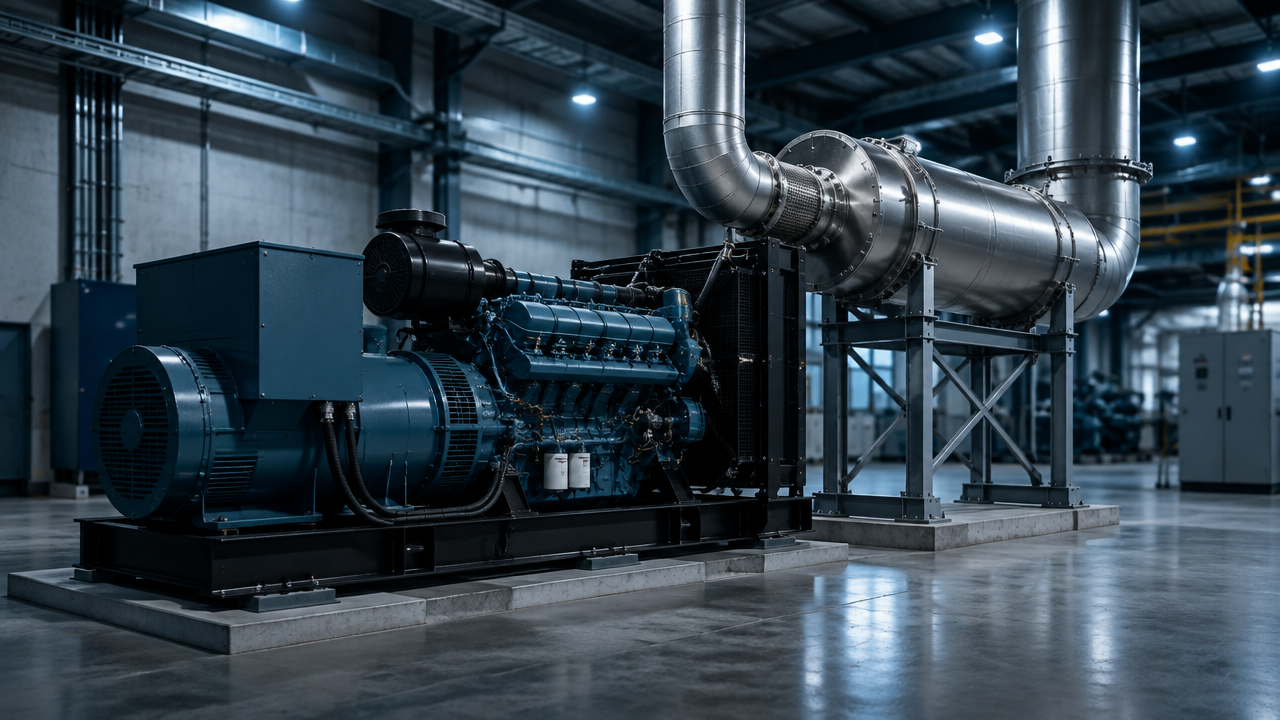
Most generator owners do not think about emissions until something forces the issue: a neighbour's complaint, an inspection, a client questionnaire, or an environmental consultant asking what control measures are in place. Understanding RECD before that moment makes every one of those conversations easier.
1. Exhaust is the visible part of the problem
Diesel generators are judged by what people can see and smell. Dark smoke during start-up or load changes is the most common trigger for complaints from residents, tenants and neighbouring businesses. An RECD addresses the particulate matter that produces that smoke.
2. Compliance conversations are easier with a plan
When a consultant or authority asks what your site is doing about generator emissions, "nothing yet" is an uncomfortable answer. Being able to describe the device category you have selected, its suitability basis and your maintenance plan changes the tone of that conversation entirely.
Note the wording carefully: an RECD supports your emission-control planning. It is not, by itself, a compliance certificate. Anyone who tells you otherwise is overselling.
3. Retrofit is usually cheaper than replacement
Replacing a working generator to improve emissions is expensive and disruptive. Retrofitting an exhaust device keeps the asset you already own and addresses the specific issue. For a facility with several DG sets, a phased retrofit is often the most practical route.
4. Maintenance planning starts at purchase
An RECD adds a service item to your generator routine: element inspection and cleaning. Owners who understand this at the purchase stage plan access, budget and responsibility properly. Owners who learn it later discover that the device was installed in a corner nobody can reach.
5. You can ask better questions
Understanding the basics lets you ask a distributor the questions that actually matter:
- Is this model sized for my DG capacity and duty cycle?
- What back pressure will it add, and is that within my engine maker's limit?
- How is the element accessed and how often does it need cleaning?
- What is included in installation, and what is charged separately?
A distributor who answers these clearly is worth dealing with. One who deflects them is not.
Start with your own DG details
Before you call anyone, note down your capacity in kVA, number of sets, brand, application and site district. With those five facts, a suitability check takes minutes rather than days.
Already know what you need?
Send your DG details and we will confirm availability and price — no obligation.
Talk to Our RECD Experts
Based in Mysuru, supporting customers across Karnataka.